
What Is Cockroach Janta Party? India’s Youth Movement, Economy Link and Financial Awareness
Blog by Aliceblue News Desk
24 June 2026
8 minutes
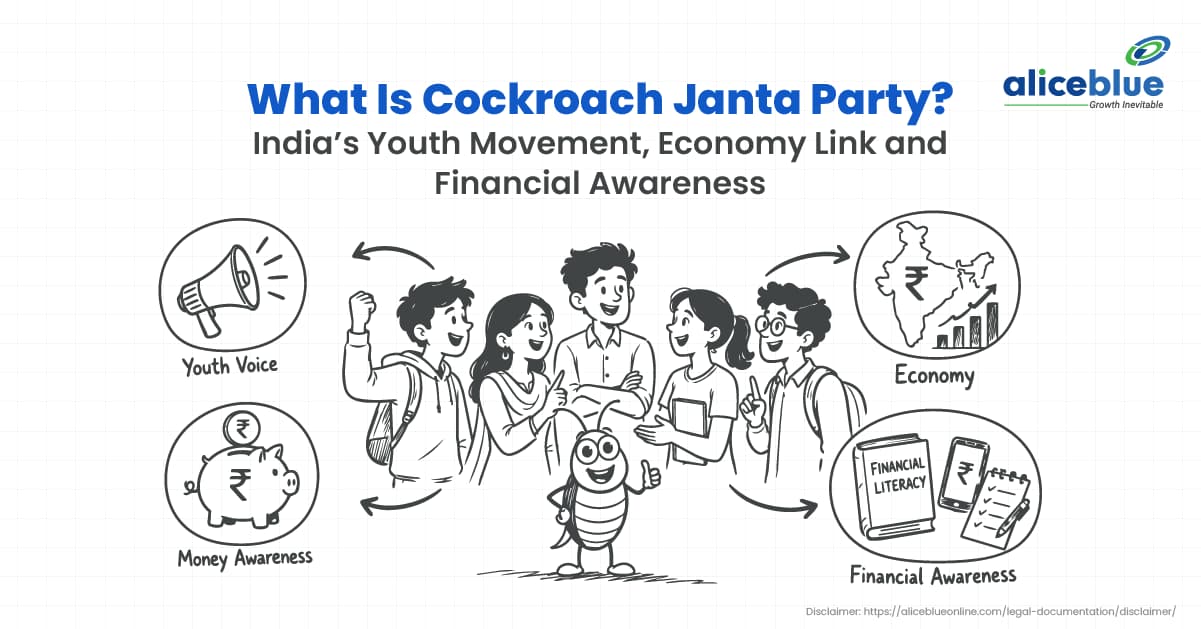
A strange question has entered India’s political and social media conversation: “What if all cockroaches came together?” At first, it sounds like a meme. But the phrase has now become part of a larger discussion around young India, unemployment, exam pressure, paper leaks, recruitment delays, and public accountability.
The phrase is linked to the Cockroach Janta Party, known as CJP, a satirical youth-led movement that has gained attention online and offline. While the name sounds unusual, the emotion behind it is serious. Many students, job seekers, and young citizens are using humour, memes, and social media to talk about issues that directly affect their future.
This article explains what Cockroach Janta Party means, why it is trending, how it connects with youth politics, and why the concerns behind it matter for India’s economy, financial awareness, and young investors.
What Is Cockroach Janta Party?
Cockroach Janta Party is a youth-driven satirical movement that uses the image of a cockroach as a symbol for people who feel ignored, dismissed, or treated as unimportant by the system.
The movement became popular not only because of its unusual name, but because it connected with real concerns among young Indians. These include exam paper leaks, delayed recruitment, job uncertainty, unemployment, and lack of accountability in systems that shape student and career outcomes.
In simple words, Cockroach Janta Party represents a digital-age protest style where young citizens use humour, symbolism, memes, and online platforms to raise serious civic issues.
Why Is Cockroach Janta Party Trending?
Cockroach Janta Party is trending because it combines humour, anger, and a strong symbol. The word “cockroach” grabs attention because it is unusual and uncomfortable. But the reason it stayed in public discussion is that it reflects a feeling many young people already had.
Across India, many students prepare for competitive exams for years. They attend coaching classes, pay exam fees, wait for results, and plan their future around recruitment timelines. When paper leaks, exam cancellations, or delays happen, the impact is not only academic. It affects confidence, family finances, career planning, and mental health.
That is why this movement finds support. It gives scattered frustration a common voice. A student in one city, a job seeker in another state, and a young voter watching the system from outside can all relate to the same question: “We are working hard, but is the system working fairly for us?”
From a Meme to a Message
The internet often turns serious issues into jokes, but some jokes survive because they carry a deeper message. The phrase “What if all cockroaches came together?” works because it sounds funny at first, but it also points to the power of numbers.
A single cockroach may be ignored. A group cannot be ignored easily. That is the metaphor young people are using. It suggests that people who feel weak or unheard can become visible when they come together.
This is how meme politics works. A meme is not only a picture or a joke. It can become a shortcut for expressing shared emotion. In this case, the cockroach symbol has become a way to talk about survival, anger, unity, and visibility.
Youth Frustration Behind the Movement
The rise of the Cockroach Janta Party cannot be understood only as an online trend. A trend becomes powerful when it touches an existing public emotion. In this case, that emotion is youth frustration.
Many young Indians are expected to study hard, get stable jobs, support their families, and build a secure future. At the same time, they face intense competition, limited job opportunities, delayed recruitment processes, and uncertainty around exams.
When students hear about paper leaks or irregularities, the frustration becomes sharper. They do not see it as just one mistake. They see it as a failure of fairness. For a student who has studied for years, even one leaked paper can feel like a direct attack on honest effort.
Exam Leaks, Job Pressure and Youth Anxiety
Competitive exams are deeply connected to hope in India. For many families, an exam is seen as a path to a better life. Students often reduce social activities, manage family expectations, and live under constant pressure.
When exam-related controversies happen, the damage goes beyond the exam hall. It affects students who feel their hard work has been wasted and parents who have spent money on coaching, books, rent, travel, and application fees.
This is why exam leaks have become such a strong theme in youth discussions. It is not simply about one paper or one department. It is about fairness in opportunity. Young people are asking a direct question: if hard work is not protected, what is the value of the system?
How Gen Z Is Changing Political Conversations
Gen Z is changing the style of political conversation in India. Earlier, politics was shaped mainly through party offices, student unions, rallies, newspapers, TV debates, and public speeches. These still matter, but social media has added a new layer.
Today, a political idea can begin with a reel, a meme, a hashtag, a short video, or a viral post. If the message connects, it can travel quickly across cities, campuses, coaching centres, and online communities. Cockroach Janta Party shows how young people are creating their own symbols, tone, and style.
How Youth Movements Connect With the Indian Economy
The Cockroach Janta Party may look like a political or social media trend, but the issues behind it are connected to India’s economic future. Youth unemployment, exam delays, recruitment uncertainty, and skill gaps are not only student concerns. They can affect productivity, household confidence, consumption, savings, and long-term participation in the formal economy.
India has one of the world’s largest young populations. This can become a major strength if young people are educated, skilled, employed, and financially aware. But when students and job seekers feel stuck due to delayed exams or limited opportunities, the pressure also affects families, spending behaviour, career planning, and trust in institutions.
A confident young workforce can support economic growth through income, consumption, entrepreneurship, investing, and innovation. On the other hand, uncertainty among youth can slow career decisions and reduce financial confidence.
Why Youth Confidence Matters for Markets
Financial markets do not move only because of company profits or global cues. Over the long term, they are also shaped by employment, income growth, consumption, savings, and participation.
A youth movement may not directly affect the stock market in the short term. But the concerns raised by such movements point to larger themes: employment quality, education trust, skill development, future income growth, and consumer confidence.
When young people earn, save, invest, and build businesses, they become consumers, taxpayers, investors, entrepreneurs, and contributors to long-term growth. For investors and market learners, this is a reminder to look beyond headlines and understand the link between society, economy, policy, and markets.
From Civic Awareness to Financial Awareness
For platforms like Alice Blue, the larger lesson from this discussion is educational. Young India needs clarity, transparency, and systems that respect effort. The same need exists in the financial world.
Young investors do not only need access to trading platforms. They also need simple financial education, risk awareness, and clear explanations of how markets work. Financial awareness helps young people understand budgeting, emergency savings, inflation, compounding, diversification, risk, and disciplined investing.
This does not mean every young person should start trading. It means every young person should understand money better. A financially aware youth population can make better personal decisions and contribute more confidently to the economy.
Conclusion
Cockroach Janta Party has become a talking point because it reflects the mood of young India — a mix of frustration, humour, and the need to be heard. What started as a meme has opened a larger conversation around exams, jobs, accountability, and youth confidence.
Beyond politics, it also highlights an economic point: India’s growth depends on skilled, informed, and financially aware youth. Civic awareness and financial awareness must go together because a stronger economy needs responsible citizens, confident workers, and informed financial decision-makers.
FAQs
Cockroach Janta Party is a satirical youth-led movement in India that has gained attention for raising concerns around exam irregularities, unemployment, recruitment delays, and youth frustration through humour, memes, and public participation.
Cockroach Janta Party is trending because it uses a strong and unusual symbol to express youth frustration. It has connected with students and job seekers who are concerned about exam leaks, delayed recruitment, job pressure, and accountability.
The cockroach symbol represents people who feel ignored or dismissed but continue to survive and organise. In this movement, it is used as a metaphor for resilience, unity, and visibility.
Cockroach Janta Party is widely discussed as a satirical and youth-driven political movement. Its public identity combines humour, protest, and civic messaging rather than traditional political branding.
The movement itself may not directly affect the Indian economy, but the issues behind it are connected to the economy. Youth unemployment, exam delays, recruitment uncertainty, and skill gaps can affect productivity, confidence, consumption, savings, and long-term economic participation.
Youth confidence matters because young people are future earners, consumers, investors, entrepreneurs, and taxpayers. When young people have stable income, financial awareness, and confidence in the system, they can contribute more actively to economic and market participation over time.

Blog by Aliceblue News Desk


