How to Freeze and Unfreeze a Demat Account? (Step-by-Step Guide for 2026)
Blog by Aliceblue News Desk
30 March 2026
6 minutes
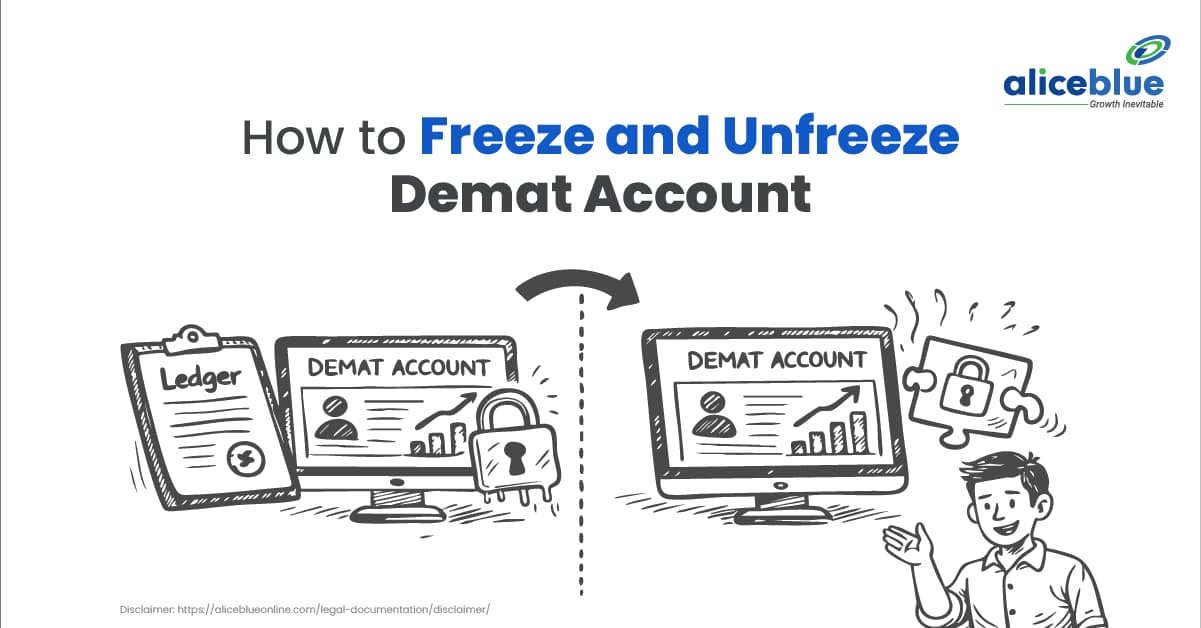
Many investors don’t realise that even when they are not trading, their demat account remains active, leaving their holdings exposed to unauthorised transactions. That is why it is important to understand how to freeze and unfreeze a demat account.
A demat account freeze is a security feature that temporarily restricts specific transactions in your account. It helps protect your holdings and gives you greater control without requiring the account to be closed.
Here’s a complete breakdown of how freezing works, when to use it, and what most investors overlook.
What is Freezing a Demat Account?
Freezing a demat account means putting a temporary restriction on transactions in the account. This does not close the account. Your shares remain safe in the demat account, but certain actions, such as selling or transferring shares, may be blocked based on the type of freeze applied.
Investors typically use this feature when they are inactive for a period or want to prevent unauthorised transactions.
A freeze can usually be applied in different ways:
- Debit freeze: It prevents shares from being moved out of the account
- Credit freeze: It prevents securities from being credited into the account
- Full freeze: It blocks both debit and credit transactions
- ISIN-level freeze: It blocks transactions only for a specific security instead of the entire account
Each type serves a different level of control depending on your requirements.
Simple Scenario
Neha, a working professional, is travelling for two months and will not be actively using her demat account. To keep her holdings secure and prevent any unauthorised share transfer, she can request a freeze on the account.
What is Unfreezing a Demat Account?
Unfreezing removes the restrictions placed on your demat account, allowing normal transactions to resume.
This is useful when the investor wants to start using the account normally again after keeping it frozen for a certain period.
Simple Scenario
After returning from her trip, Neha wants to sell some shares from her demat account. Since the account was frozen earlier, she first submits an unfreeze request. Once the restriction is removed, she can use the account as usual.
Reasons to Freeze Your Demat Account
Freezing a demat account is not something most investors do regularly, but it can be useful in certain situations. Broadly, there are two common reasons why someone may choose to freeze their account.
Regulatory reasons
As per regulatory guidelines, accounts may be frozen in cases of suspected fraud or legal issues. The main purpose is to prevent any unauthorised transaction during that period.
Personal safety and account control
Some investors freeze their demat accounts as a safety measure when they are not actively trading. This helps reduce the risk of misuse or unauthorised access and is especially useful for long-term investors.
Freezing and Unfreezing a Demat Account: Step-by-Step Process
Freezing and unfreezing a demat account usually follows a simple step-by-step process. Here is how it works.
Step 1: Know Why You Want to Freeze
Start by understanding why you want to freeze your demat account. It may be for safety or because you do not plan to trade for some time.
Step 2: Choose the Freeze Type
Select the type of freeze based on your need. For example, a debit freeze stops shares from moving out of the account.
Step 3: Contact Your DP
Reach out to your Depository Participant, or DP, which is usually your broker. This is where you place the freeze request.
Follow these steps:
- Log in to the broker app
- Go to “Demat Services”
- Select the freeze option
- Choose type
- Verify via OTP
Step 4: Submit the Request
Complete the request through your broker’s app, support team, or form. You may also need to verify your identity.
Step 5: Freeze Gets Applied
Once the request is processed, the selected freeze becomes active. Your account will then work based on the chosen restriction.
Step 6: Understand the Impact
While the freeze is active, some transactions may not be allowed. For example, you may not be able to sell or transfer shares.
Step 7: Request Unfreeze
When you want to use the account normally again, submit an unfreeze request. Once approved, regular transactions can continue.
Implications Of Freezing Or Unfreezing A Demat Account
Freezing and unfreezing a demat account can have a few important effects that investors should keep in mind.
Improves account safety
Freezing the account helps protect your holdings by reducing the risk of unauthorised access or fraudulent transactions.
Limits account activity for some time
Once the account is frozen, certain transactions may not be allowed. This can affect your ability to sell, transfer, or otherwise use your securities until the freeze is removed.
May delay immediate transactions
If you decide to unfreeze the account, the process may take some time depending on your DP. This can be a problem if you need quick access to your holdings.
Follows regulatory guidelines
Both freezing and unfreezing are carried out under the rules set by SEBI and the depositories, which help maintain investor protection and proper account control.
Demat Account Freeze vs Trading Account Freeze
Although these terms may sound similar, a demat account freeze and a trading account freeze affect different parts of your investment activity, so it is important to understand how they differ.
Basis | Demat Account Freeze | Trading Account Freeze |
What it affects | Movement of securities in the demat account | Ability to place buy or sell orders |
Main purpose | Restrict transfer of holdings | Restrict access to the trading platform |
Managed by | Depository Participant | Broker |
Impact on shares | Shares remain locked based on the freeze type | Shares remain in demat, but trading access may stop |
Best use case | Safety of investments | Temporary block on trading activity |
So, while both involve temporary restrictions, a demat account freeze protects your securities, whereas a trading account freeze only blocks your access to buy or sell through the platform.
Freezing and unfreezing a demat account is a useful feature for investors who want better control, added safety, and flexibility in managing their holdings. It can be especially helpful when you are not actively trading or want to protect your account from unauthorised activity.
By understanding how this process works and when to use it, you can manage your investments more confidently. If you are ready to begin investing, Alice Blue offers a simple and reliable way to open a demat account and get started. Open a Demat Account with Alice Blue today and take the first step in your investment journey.
Frequently Asked Questions
Usually, no if the freeze blocks debits from the account. You may need to unfreeze the account first before selling your shares.
You can unfreeze your demat account by submitting a request to your Depository Participant or broker. The exact process may be online or form-based, depending on the provider.
Investors usually freeze a demat account to prevent unauthorised transactions or to avoid using the account for some time. It acts as an extra safety step.
In some cases, yes. A freeze can be applied to a specific security rather than the entire demat account, depending on the facilities offered by your DP.
Active traders and investors who may need to sell quickly may find it inconvenient. A freeze can delay transactions until the account is unfrozen.

Blog by Aliceblue News Desk


