
Index Rebalancing: What Every Investor Should Know
Blog by Aliceblue News Desk
02 April 2026
9 minutes
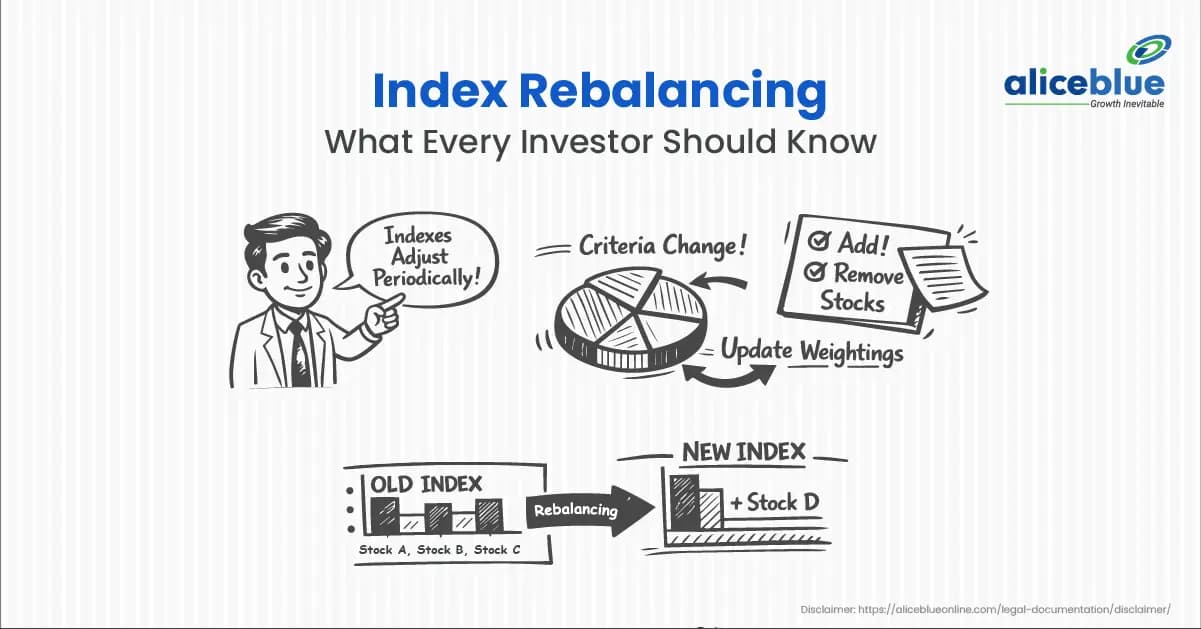
Ever seen your index fund drop out of nowhere and felt scared? That’s index rebalancing. It fixes indexes like Nifty 50 or S&P 500 by changing stocks and shares. If you hold funds for years or trade often, it can hurt or help your money. This guide explains it easily, so you spot chances, skip traps, and grow your cash with no worry.
What Is Index Rebalancing?
Index rebalancing is a regular update to a stock market index, like Nifty 50 or S&P 500. It adds new stocks, removes old ones, and changes how much each stock counts.
This keeps the index a true picture of the market as companies grow, shrink, or face changes. Funds that track the index, like ETFs, must match these shifts to stay accurate.
For example, a fast-growing firm joins while a weak one leaves, based on size and trading ease. It happens every few months to keep things fair and fresh.
Purpose of Index Rebalancing
Index rebalancing keeps market indexes true to the real economy by fixing changes over time. It makes sure fast-growing companies join while weak ones leave, so the index shows today’s top players.
Main goals include matching market shifts like new listings or mergers, cutting too much focus on one area, and keeping rules fair. This helps funds that copy the index stay on track and gives investors a clear market view.
Without it, indexes would show old info, fooling your investment choices.
Problems Rebalancing Causes Investors
Index rebalancing looks simple, but it trips up many investors with surprises. Your ETF or index fund NAV can jump or drop fast as funds buy and sell to match changes.
Key issues hit your pocket:
- Sudden price swings: Added stocks rise 2-5% from big buys; dropped ones fall the same. You feel it if you trade at bad times.
- Hidden costs: Funds pay trading fees and spreads, which cut your returns a bit each time up to 0.5% a year.
- More ups and downs: Front-runners and big flows make markets jumpy near dates, shaking new investors.
- Missed chances: If you don’t watch lists, you skip easy gains from stocks about to join.
Long-term holders mostly ride it out fine, but short-term plays or panic sells hurt most. Spot the dates to stay safe.
How Does Index Rebalancing Work?
Index rebalancing keeps stock indexes like Nifty 50 up to date by changing the list of stocks and their shares. Index makers like NSE do this every 3 or 6 months using clear steps. Here’s a simple and clear breakdown:
Step 1: Fix the Check Date
- Index makers choose fixed dates well in advance.
- For Nifty 50, reviews happen on the last Friday of every March, June, September, and December.
- This gives funds and investors time to prepare.
Step 2: Gather and Check Data
Teams gather data on all major listed companies, both those already in the index and potential new ones. They test each stock with these rules:
- Free-float market cap: This is the value of shares available for the public to buy (not held tight by company owners or promoters). It must rank among the top 50 largest.
- Trading volume: Average number of shares traded daily over the past 6 months must be high, so the stock is easy to buy or sell without big price jumps.
- Listing time: The company must have been listed on the stock exchange for at least 1 month.
- Other basics: No major fines or problems. Sectors must be balanced. No single sector like banking or tech can be more than 33% of the index.
Step 3: Rank Stocks and Decide Changes
They rank all eligible companies from largest to smallest based on free-float market cap.
They select the top 50 that pass all tests.
- Stocks that grew fast (like Zomato during a boom) move up the ranks and get added.
- Stocks that shrank or no longer qualify (like a bank losing market share) get removed.
- They also set share limits. No one stock can have more than 33% weight, and the top 3 stocks together stay under 62%.
Step 4: Announce the Changes
Four to six weeks before the change, they publish the complete list on their website.
The list clearly states:
- Which 4-5 stocks will be added.
- Which 4-5 stocks will be removed.
- An early estimate of each stock’s new percentage share in the index.
Funds that track the index use this time to gather cash for buying new stocks and selling old ones.
Step 5: Run the Changes
On the exact date, after the market closes at 3:30 PM IST:
- The new index takes effect the next morning when markets open.
- Index funds and ETFs buy large amounts of added stocks. This flood of money pushes those prices up by 2-5%.
- They sell large amounts of removed stocks. This pushes those prices down by 2-5%.
- They calculate exact shares: Divide each stock’s free-float market cap by the total market cap of all stocks in the index. For example, if Reliance makes up 10% of the total, funds hold exactly 10% of their money in Reliance.
Step 6: Keep Steady and Buffers
- The new index list stays in place until the next review.
- They make small daily adjustments if market caps change slightly.
- To prevent constant switching, dropped stocks cannot be added back for a full 1 year.
Example of Index Rebalancing
Here’s a real example from Nifty 50’s June 2025 rebalancing. It shows the full process clearly.
What Changed:
NSE checked data up to the end of May 2025. They added Trent and Adani Green because both grew fast in free-float market cap and ranked in the top 50 with good trading volume. They dropped Divi’s Labs and LTIMindtree since those fell out of top ranks.
Announcement Phase:
Four weeks before change day, NSE posted the list online. Funds knew exactly what to buy and sell. They started raising cash for the new stocks.
Live Change Day:
After the market closed last Friday of June, the new Nifty 50 started the next morning. Index funds bought ₹5,000 crore worth of Trent and Adani Green shares. This big demand pushed their prices up 4% on average.
Price Effects:
Dropped stocks like Divi’s saw selling pressure. Prices fell 2-3% from fund sales. Adani Green’s new weight became 1.2%. Its market cap is divided by the total Nifty cap.
Investor Lesson:
Early buyers of Trent gained from the boost and later growth. This example proves rebalancing moves big money to winners fast while shaking out losers.
How Index Rebalancing Impacts the Stock Market
Index rebalancing shakes the stock market in clear ways. Big funds buy and sell to match new index lists, moving prices and trade levels short-term.
- Short-Term Price Moves – Added stocks get big buys from ETFs. Prices jump 2-5% from cash floods around change day. Dropped stocks face sales, so prices fall 2-5%.
Example: Tesla soared when added to S&P 500 as funds bought billions. - Jump in Trading Volume – Rebalance days see 2x normal trades. Funds shift billions, drawing traders and algos. This lasts weeks before and after.
In India, Nifty changes spark ₹5,000 crore trades like in June 2025. - Volatility Increases – Prices move up and down a lot near rebalance dates. Traders buy newly added stocks early, while removed stocks see heavy selling. Small or less-traded stocks face the biggest swings.
- Sector Effects – If many new stocks come from one area like tech, that sector gets a lift from fund buying. Changes in large indexes like S&P 500 can influence global markets.
Over time, these effects fade. Strong new stocks often keep growing due to real business success. Weak removed stocks can recover if their company improves. Track rebalance dates to trade wisely or stay safe.
How Investors Can Use This Information
Index rebalancing gives investors ways to make smart choices. You can use it to protect money or find buy chances. Here is how:
For Long-Term Holders:
Keep your index funds or ETFs as is. The funds buy new stocks and sell old ones on their own. This puts your money into better companies over time. Prices may go up or down for a few days, but they settle back. Do not sell in fear, hold and wait.
For Short-Term Traders:
Buy stocks before they get added to the index. These stocks often rise 2-5% when the news comes out. Funds will buy a lot, pushing prices higher. Sell stocks that will leave the index. Their prices drop when funds sell.
Open a low-cost account with Alice Blue to trade new additions and removals easily. Their ANT app helps track Nifty dates and execute orders fast.
For Your Own Portfolio:
Check your investments once a year. If one stock takes too much space (like over 10%), sell some. Buy more small ones to even it out. This cuts risk, just like indexes do.
Risks to Keep in Mind
Index rebalancing can cause problems for investors. Here are the main risks explained simply.
- Price Drops for Removed Stocks: When a stock leaves the index, funds sell large amounts of it. This heavy selling makes the price fall 2-5% quickly on the change day. If you own that stock, its value drops for a short time.
- Extra Market Shakes: Prices move up and down a lot around rebalance dates. Traders buy and sell fast, which creates wild swings. New investors might get scared and sell at the wrong time, losing money.
- Extra Costs for Funds: Funds pay trading fees and price gaps when they buy and sell to match the new index. These small costs add up to 0.2-0.5% less return each year. Less-traded stocks cost even more.
- Hard-to-Time Trades: If you buy a stock before it joins, the price jump might not happen yet. If you wait too long, you miss the gain. The same problem happens when selling stocks that will leave.
- Too Much Focus on One Area: If many new stocks come from the same sector like tech, that area gets too much weight for a while. If that sector drops later, your index fund loses more than normal.
Conclusion
Index rebalancing keeps indexes like Nifty 50 current, but brings short price jumps and high trades. For long-term holders, just keep your ETFs. The funds handle buying new stocks and selling old ones on their own, so your money stays matched to top companies. Traders buy new stocks early to catch 2-5% gains from fund buys. Sell old stocks before prices drop.
Check NSE dates first. Balance your stocks yearly. Do not sell in panic. This simple plan turns rebalancing into gains for you.
FAQs
1) What is index rebalancing in simple terms?
Edit Content
Index rebalancing updates stock indexes like Nifty 50. It adds fast-growing companies and removes weak ones. It also changes each stock’s share based on its size. This keeps the index a true picture of the market.
2) When will the Nifty 50 rebalance?
Edit Content
NSE reviews on the last Friday of March, June, September, and December. They check data from the month before. Changes start after the market closes that day.
3) How does it affect stock prices?
Edit Content
Funds buy new stocks, so prices go up 2-5%. Funds sell old stocks, so prices drop 2-5%. Trades get very high around these dates, but prices calm down soon after.
4) Should I trade during rebalancing?
Edit Content
No, if you hold ETFs long-term. Funds change on their own. Traders can buy new stocks early for quick gains, but watch for price shakes.
5) Where do I find rebalance dates?
Edit Content
Visit NSE or S&P websites. They share full lists 4-6 weeks early with new and old stocks.

Blog by Aliceblue News Desk


