
Lock-In Period for Shares in a Demat Account: What Every Indian Investor Must Know
Blog by Aliceblue News Desk
06 May 2026
16 minutes
You applied for an IPO. Shares got credited to your demat account. But on listing day, you could not sell them. No error. No broker problem. Just a restriction you were not told about clearly enough.
This catches thousands of Indian investors off-guard every year. A lock-in period is a SEBI rule that stops certain shareholders from selling, pledging, or transferring their shares for a fixed duration. The important thing to know upfront: if you are a retail investor who applied through a public IPO offer, this rule does not apply to you. You can sell from Day 1 of listing.
But if you are buying shares of recently listed companies in the secondary market, or if you hold ESOPs or pre-IPO shares, the lock-in calendar directly affects your money. This article explains how it works, who it affects, and what actually happens when a lock-in expires.
What Is a Lock-In Period?
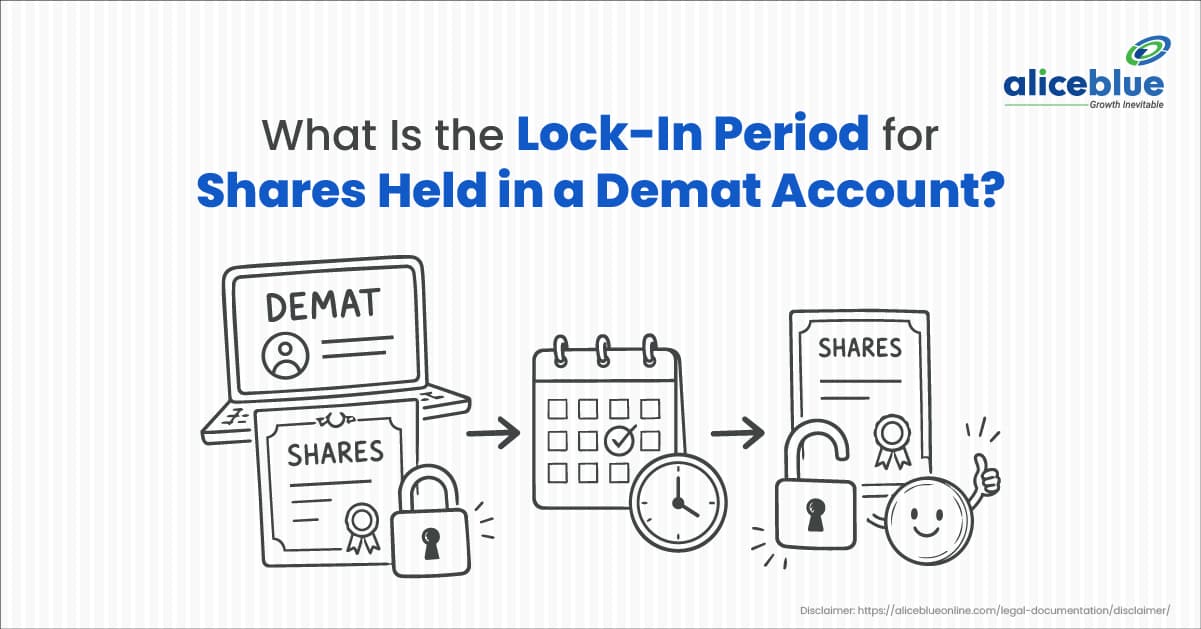
A lock-in period is a fixed window during which certain shares in a demat account are marked non-transferable by NSDL or CDSL. You can see the shares in your account. You just cannot sell, transfer, or pledge them until the restriction ends.
SEBI introduced this rule under its ICDR (Issue of Capital and Disclosure Requirements) Regulations to prevent promoters and early investors from exiting their positions immediately after a company lists on the stock exchange. Without this rule, insiders could use an IPO to raise funds, list the company, and offload their entire stake on Day 1, leaving retail buyers holding shares that the founders themselves no longer believe in.
The lock-in is not a punishment or a demat account error. It is a market stability measure. And it does not apply equally to every category of investor.
Who Does the Lock-In Apply To?
This is where most beginners get confused. Here is the straight answer.
Retail investors who apply through the public offer of an IPO face zero lock-in. You can sell from the moment trading begins on listing day.
The lock-in applies to:
- Promoters of the company going public
- Pre-IPO investors, such as venture capital and private equity funds
- Anchor investors who subscribe before the IPO opens to the public
- Employees receiving shares under ESOP plans
- Investors receiving shares through preferential allotments
- Shareholders converting old physical share certificates to demat under SEBI’s legacy window
How the Lock-In Works in Practice
When a company files IPO documents with SEBI, it must disclose exactly which shares are under lock-in and for how long. This information sits inside the Red Herring Prospectus (RHP). Most retail investors never read it. That is a mistake.
After allotment, the company’s Registrar and Transfer Agent instructs NSDL or CDSL to place a freeze on the relevant shares. Those shares appear in your demat account with a “Non-Transferable” label or a lock icon, depending on your broker’s app. You can see them, but you cannot move them.
When the lock-in period ends, the depository lifts the restriction automatically. No request needed. No broker call required. The shares become tradeable on their own.
One detail that matters: All lock-in periods are counted from the date of IPO allotment, not the listing date. In most Indian IPOs, listing happens six to seven days after allotment. If you calculate the unlock date from the listing day, you will be off by about a week.
Lock-In Duration Under Current SEBI Rules
SEBI significantly reduced lock-in timelines in August 2021, cutting the promoter minimum from three years to 18 months. Here is where the rules stand as of April 2026:
Shareholder Category | Lock-In Duration | Counted From |
Promoters (minimum 20% of post-issue capital) | 18 months | IPO allotment date |
Promoters (shareholding above 20%) | 6 months | IPO allotment date |
Pre-IPO non-promoter investors | 6 months | IPO allotment date |
Anchor investors (50% of allocation) | 30 days | IPO allotment date |
Anchor investors (remaining 50%) | 90 days | IPO allotment date |
Preferential allotment to promoters | Up to 3 years | Date of allotment |
Physical shares converted to demat (SEBI legacy window) | 1 year | Date of registration of transfer |
The 18-month rule applies specifically to the minimum promoter contribution, which SEBI defines as a minimum of 20% of the fully diluted post-issue paid-up capital. Any promoter holding above that 20% threshold is locked in for only six months. Always check the RHP of the specific IPO, as SEBI allows reduced lock-in durations for companies that meet profitability criteria or qualify for fast-track IPO eligibility. These relaxations are not automatic.
What Is the Promoter Lock-In Period After IPO in India?
Of every SEBI lock-in rule, the promoter lock-in matters most to the market, promoters typically hold 40-60% of a company’s total shares, so what they do when their lock-in ends moves stock prices more than any other unlock event.
- The rule itself: the minimum promoter contribution, SEBI’s term for at least 20% of the post-issue, fully diluted paid-up capital, is locked in for 18 months from the IPO allotment date. Any promoter shareholding above that 20% threshold is locked in separately, for 6 months from the same allotment date. Both windows are counted from allotment, not listing day, which is the single most common calculation mistake investors make with this rule (the same mistake this article flags for anchor and pre-IPO lock-ins).
- Why 18 months, specifically: this wasn’t always the rule. SEBI reduced the promoter lock-in from three years to 18 months in an August 2021 reform, easing the restriction to make Indian IPOs more attractive to list on, while still keeping a meaningful commitment window in place.
- Why this protects you, not just the company: an 18-month lock-in forces promoters to have skin in the game well past listing day. If a founder can’t exit for a year and a half, they have a direct incentive to keep the business performing, not just to engineer a strong listing pop and walk away. That’s the same logic behind every lock-in category in this article, but it matters most here because promoters usually hold the largest single block of any locked-in group.
- What tends to happen when it expires: the outcome splits two ways, and both are common. If promoters hold their shares through the unlock date, the market usually reads it as a confidence signal – “if the people who know this business best aren’t selling, maybe there’s still upside” – and the stock can hold steady or even rise. If promoters sell meaningfully into the unlock, especially without prior signaling, the stock can fall sharply in days as the market absorbs a sudden, large increase in tradeable supply. The direction depends heavily on how the company has actually performed in the 18 months since listing – strong fundamentals tend to blunt the selling pressure; weak ones amplify it.
- The 2026 context: this isn’t a small-scale risk to shrug off. India is currently working through one of its largest lock-in unlock waves in years – roughly ₹5.7-6 lakh crore (around $69 billion) worth of pre-IPO shares, including promoter holdings, are becoming eligible for sale over the course of 2026. If you’re holding a stock that listed 12-18 months ago, checking where it sits on that unlock calendar is worth five minutes.
The anchor investor lock-in, covered in the real example below, works on a much shorter clock (30 and 90 days) and tends to create sharper, faster price reactions. Promoter unlocks take longer to arrive but typically move more shares when they do.
Real Example: Meesho, January 7, 2026
Meesho’s IPO opened for subscription between December 3 and December 5, 2025, and was listed on December 10, 2025. The anchor investor lock-in for 50% of their allocation was set to expire on January 7, 2026 — 30 days from the allotment date.
On January 7, 2026, 10.99 crore shares representing approximately 2% of Meesho’s total equity became eligible for trading. Based on the previous closing price of Rs 181.69, the value of those shares was approximately Rs 1,997 crore.
The stock hit a 5% lower circuit that day and fell to Rs 173.13, trading close to its listing price of Rs 162.50. The stock had earlier hit a high of Rs 254.40 on December 18 — meaning by January 7 it was already down about 32% from that peak.
The lesson here is not that lock-in expiry always causes a crash. Not all 10.99 crore shares were sold on that day. But the market priced in the increased supply risk in advance, and buyers who had entered at Rs 230-plus without tracking the unlock calendar absorbed real losses.
What Happened in February 2026: The Rs 30,000 Crore Week
The Meesho event was not isolated. Between February 2 and February 6, 2026, lock-in restrictions expired for 10 listed companies simultaneously, making shares worth over Rs 30,000 crore eligible for trade in a single week.
NSDL alone saw 149.2 million shares (75% of its pre-IPO holdings) unlock on February 5, worth Rs 14,374 crore. Lenskart shares fell over 3% on December 8, 2025, when its one-month anchor lock-in ended, with 4.07 crore shares worth approximately Rs 1,700 crore entering the tradeable pool.
Two important points from this: First, expiry does not mean immediate selling. Most institutional investors do not dump shares the moment they can. Second, when multiple large unlocks happen in the same week, the collective supply pressure on mid-cap and small-cap indices can be meaningful.
If you are an active secondary market investor, checking the unlock calendar before buying any stock listed within the last 18 months is basic due diligence, not optional.
SEBI's April 2026 Update on Pledged Shares
On April 8, 2026, SEBI issued a circular under the ICDR framework following amendments it had made to the regulations on March 21, 2026. The change addresses a gap that existed when promoters or pre-IPO shareholders pledged their locked-in shares as collateral for loans. In those cases, a standard lock-in could not always be technically created at the depository level.
Under the new mechanism, when a traditional lock-in cannot be imposed on pledged shares, NSDL and CDSL will now mark those shares as “non-transferable” for the full duration of the lock-in period. This closes a previous grey area where a lender could potentially claim or transfer locked shares in the event of a default.
If you hold ESOP shares or pre-IPO allotment and were planning to pledge them for a loan, check whether this April 2026 circular affects your specific situation before proceeding.
What Happens When a Lock-In Expires
The expiry of a lock-in period does not automatically mean the stock will fall sharply. But the risk of increased selling is real, and experienced market participants track these dates precisely because of it.
What typically happens in the weeks before a major unlock:
- Traders who monitor NSE and BSE shareholding filings identify upcoming expiry dates
- The stock sometimes sees selling pressure two to three weeks before the actual unlock date, as buyers price in anticipated supply.
- Anchor investors (30-day lock-in holders) are the first to exit, often before the stock has had time to build a stable post-listing price base.
- Promoter unlocks (18 months) are tracked closely by institutional investors and often create meaningful price movement if the promoter has indicated intent to reduce stake.e
How to track upcoming unlock dates:
Zerodha’s Kite platform now shows lock-in expiry dates directly in the fundamentals section under “Events” for each stock. Chittorgarh.com maintains a free, regularly updated table of anchor investor lock-in expiry dates for all 2026 IPOs. NSE’s corporate filings section also publishes shareholding patterns that include locked-in share counts for every listed company.
Key Features of Lock-In Periods
- Lock-in is enforced at the depository level by NSDL or CDSL, not by your broker.
- Locked shares are fully visible in your demat account, but carry a non-transferable status.
- The freeze lifts automatically at expiry with no action needed from the investor.
- Pledging of locked shares is now restricted under SEBI’s April 2026 circular.
- Lock-in terms differ per IPO and are always disclosed in the RHP
- Retail investors applying through the public offer have no lock-in at any point
Why Lock-In Periods Work in Retail Investors' Favour
For retail investors buying through a public IPO offer, lock-in rules on insiders are a protection mechanism:
- Promoters locked in for 18 months cannot exit immediately if the listing runs up, which keeps their incentives aligned with long-term company performance
- The rule reduces the chance of an IPO being used purely as an exit vehicle for insiders
- Pre-IPO investor lock-ins of six months allow the stock price to find a more stable level before large institutional holders can sell
- All lock-in details must be disclosed in the RHP before you invest, so the information is always accessible.
Risks to Be Aware Of
- If you hold ESOP shares or pre-IPO allotment and the stock rises sharply during your lock-in window, you cannot sell at those prices
- Large unlock events can create temporary but sharp downward pressure on stock prices, affecting retail buyers who entered the stock on the secondary market
- Locked-in shares cannot be sold or pledged for emergency liquidity needs, even in personal financial emergencies
- SME IPO promoters face an additional restriction since December 2024: SEBI caps offer-for-sale by SME promoters at 20% of their shareholding
Lock-In Shares Versus Regular Demat Shares
Feature | Locked-In Shares | Regular Demat Shares |
Can be sold | No, until lock-in ends | Yes, anytime during market hours |
Can be pledged | Restricted under April 2026 SEBI rules | Yes, eligible |
Visible in the demat account | Yes, with a non-transferable or lock tag | Yes, with no restrictions |
Restriction lifted automatically | Yes, by NSDL or CDSL at expiry | Not applicable |
Applies to retail IPO investors | No | Yes |
IPO Allotment and Lock-In Are Not the Same Thing
This is the single most searched question on Indian investor forums: “Can I sell my IPO shares on listing day?”
The answer is yes, if you applied through the public offer. IPO allotment is the process by which SEBI’s lottery system assigns you shares from the portion reserved for retail investors. Once those shares are credited to your demat account, you are free to sell from the first minute of trading on listing day.
Lock-in applies to a completely separate pool of shares. These are shares held by promoters and pre-IPO investors that existed before the IPO. They were never part of the offer you applied to.
The two categories apply to two entirely different groups of shareholders. Confusing them causes retail investors to either panic on listing day, thinking they cannot sell, or miss the risk of buying a secondary market stock just before a large unlock event.
Do SIP Stocks or ELSS in Demat Have a Lock-In?
Two questions that come up regularly:
- Stocks bought through equity SIP: No lock-in. Each SIP instalment is a regular secondary market purchase. You can sell those shares at any time after settlement.
- ELSS mutual fund units held in demat form: Yes. Each ELSS unit carries a mandatory three-year lock-in from the date of that unit’s purchase. This applies whether the units sit in a statement form account or in a demat account.
Common Mistakes to Avoid
- Buying a recently listed stock without checking the unlock calendar
If a major lock-in expiry is coming up within 30 to 60 days of your purchase, that is a real supply risk. Check Kite’s events section, Chittorgarh’s anchor expiry table, or NSE shareholding filings before entering. - Assuming anchor investors are locked in for a long time
Anchor investors are locked in for just 30 days on 50% of their allocation. That is a very short window — and their exit often hits exactly when retail investors feel most confident about a new listing. - Calculating the unlock date from the listing day instead of the allotment date
Lock-in periods start from the IPO allotment date. The listing date is typically six to seven days later. If you use the listing date as your starting point, every unlock date you calculate will be wrong. - Not reading the RHP before applying
Lock-in terms vary by company. SEBI allows relaxations for profitable companies and fast-track IPO candidates. You cannot know the specific terms without reading the RHP. - Confusing T plus 1 settlement with lock-in
India’s T plus 1 settlement means shares you buy today arrive in your demat account by the next trading day. This is a settlement timeline. Once credited, you can sell those shares immediately. It has nothing to do with a lock-in period.
Who Should Pay Close Attention to This
Most relevant for:
- Employees holding ESOPs in a recently listed or soon-to-list company
- Retail investors who regularly buy shares of newly listed companies in the secondary market
- Anyone who received shares through a preferential allotment
- Investors converting old physical share certificates to demat under SEBI’s legacy window
Less directly relevant for:
- Retail investors who only buy shares of large-cap companies that were listed several years ago
- Investors whose entire portfolio is in mutual funds, unless they hold ELSS units in demat form
Conclusion
A lock-in period keeps promoters, pre-IPO investors, and anchor investors from selling their shares for a defined period after an IPO. Retail investors who apply through the public offer are not affected. The rule exists to protect you, not restrict you.
Where this knowledge pays off is in secondary market investing. Meesho’s 5% lower circuit on January 7, 2026, and the Rs 30,000 crore worth of shares unlocked in the week of February 2 to 6, 2026, are real examples of how unlock events move stock prices. Investors who tracked those dates had time to decide. Investors who did not get caught in the correction.
Tracking the unlock calendar, reading the RHP, and understanding who holds which shares in a newly listed company are skills that take 20 minutes per IPO to apply. That is worth building.
Frequently Asked Questions
Yes. Retail investors who receive shares through the public offer of an IPO face no lock-in. You can sell from the first minute of trading on listing day.
18 months for the minimum 20% post-issue promoter holding, and 6 months for any promoter shareholding above that threshold – both counted from the allotment date. See the full breakdown above for what typically happens when this period ends.
From the allotment date. The listing typically happens six to seven days after allotment in Indian IPOs. Calculating from the listing date will give you the wrong unlock date.
Your demat app will show a lock icon or “Non-Transferable” label next to restricted shares. You can also check the NSDL or CDSL portal directly, or look at the shareholding pattern filings on NSE or BSE for lock-in share counts.
On January 7, 2026, Meesho’s 30-day anchor investor lock-in ended, making 10.99 crore shares worth approximately Rs 1,997 crore eligible for trading. The stock hit a 5% lower circuit that day and fell to Rs 173.13, down 32% from its December peak of Rs 254.40.
On April 8, 2026, SEBI issued a circular requiring depositories to mark pledged locked-in shares as “non-transferable” when a standard lock-in cannot technically be created. This prevents locked shares from being transferred during a loan default scenario. The change follows the ICDR amendment notified on March 21, 2026.

Blog by Aliceblue News Desk


