
Short Selling in India: How It Works, Rules, Risks & Example
Blog by Aliceblue News Desk
02 April 2026
5 minutes
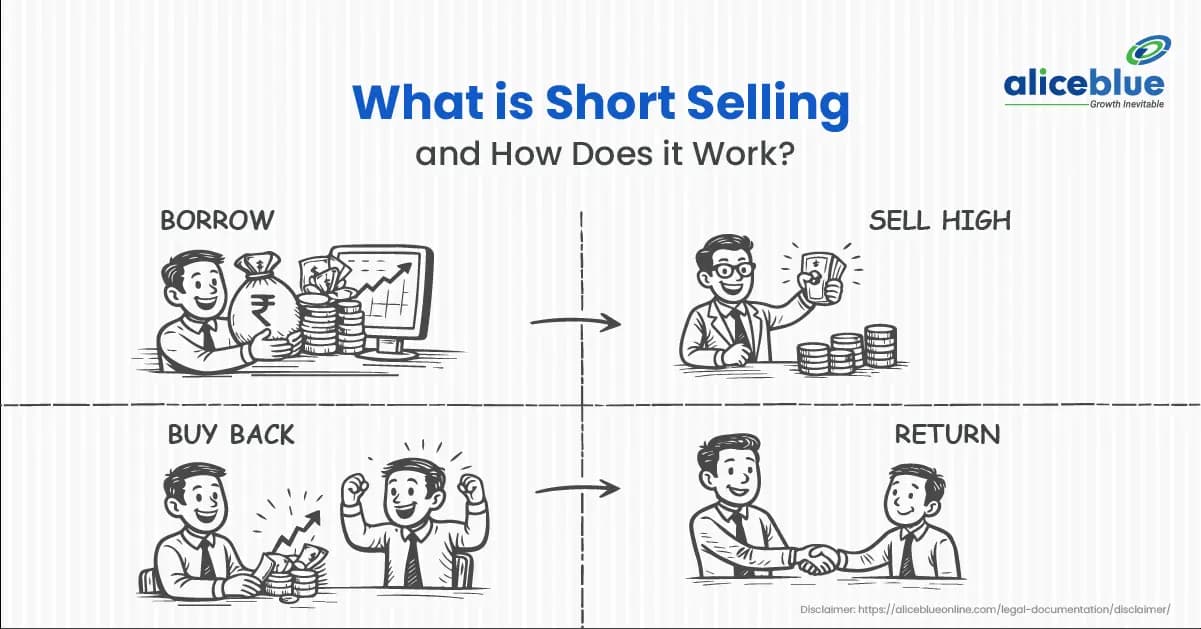
Most people think that making profits in the stock market is possible through buying stocks at a low price and selling at a high price, but there’s an investing strategy called “Short Selling” which they use to profit when stock prices fall.
Unlike traditional investing, short selling involves selling shares you don’t own, with the expectation that their price will drop.
In this blog, we explain what short selling is, how it works on trading platforms, and the risks and rewards involved for Indian stock and crypto investors.
What is ‘Short Selling’?
Short selling happens when a trader sells shares that he doesn’t own at the moment. The trader borrows these shares from a broker or another investor and sells them at the current market price. The goal is to buy them back later at a lower price, returning them to the lender, and pocketing the difference as profit.
Short selling is generally practiced by experienced traders and institutional investors who can carefully analyze market trends. Because it relies on predicting a stock’s decline. It carries a high risk-to-reward ratio.
How Short Selling Works on Platforms – Step by Step
Here’s a simplified step-by-step look at how short selling works on platforms like Alice Blue:
- Step 1: You pick a stock to short sell: You decide on how to enter the trade, either a market order (at the current market price) or a limit order (a chosen price that will be automatically executed)
- Step 2: Place a sell order: On trading platforms, you click “Sell/Short”. And the platform may borrow shares on your behalf and immediately sell them in the market.
- Step 3: Position is open (you’re on a “short” position): Now you owe those shares to the broker, and your profit/loss depends on price movement.
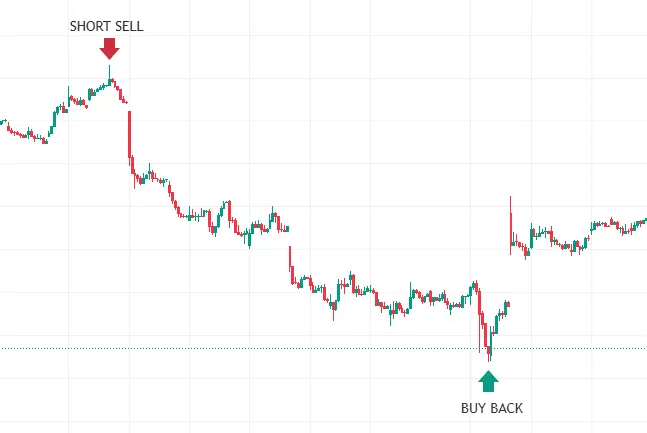
- Step 4: Wait and exit the position at a target price/market price: You place a buy order at the target price or at the market price. After the price drops, the borrowed shares are repurchased at a lower price and returned.
The difference between the selling price and the buying price is your profit.
Example:
- You short 100 shares at ₹1,600 each → sell for ₹1,60,000.
- Price drops to ₹1,300 → buy back those 100 shares ( ₹1,300 x 100 = ₹1,30,000 )
- The difference between the selling price and the buying price is your profit (₹1,60,000 – ₹1,30,000 = ₹30,000)
Benefits of Short Selling
While risky, short selling offers several advantages:
- Profit in falling markets: You can earn even when stock prices decline.
- Hedging tool: Protects long-term investments against market downturns.
- Market liquidity: Helps maintain smooth market operations.
- Price correction: Sometimes stocks become overvalued due to hype, speculation, or excessive optimism rather than actual business performance; in such cases, short sellers step in by identifying stocks that are trading above their value and shorting those stocks in the market, increasing the supply of shares being sold, which can put downward pressure on the price.
Risks and Drawbacks of Short Selling
Short selling is not for everyone. Key risks include:
- Unlimited Losses: If the stock rises instead of falling, losses can exceed your initial investment.
- Margin Requirements: Short selling requires a margin account, where traders must maintain a minimum balance as collateral. If the trade moves against them, the broker may issue a margin call, requiring additional funds to cover potential losses.
- Regulatory Restrictions: Short selling can be banned in specific sectors during crises.
- Short Squeezes: A sudden spike in prices forces short sellers to liquidate their positions, causing rapid losses.
Real-Life Example of Short Selling in Indian Markets
- Following Hindenburg Research’s report, many traders bet against Adani stocks. Prices initially fell sharply, but due to strong buying support and volatility, prices saw sharp upward moves at times.
- Creating situations like short sellers to exit their positions, leading to rapid price spikes.
Short Selling vs Going Long: Key Differences for Investors
Strategy | Goal | Risk |
Going Long | Buy low, sell high | Limited to the investment amount |
Short Selling | Sell high, buy low | Unlimited if the price rises |
Conclusion
Short selling can be a powerful trading strategy, but it is risky and best suited for experienced traders who understand market dynamics. Profits are possible, but losses can be extreme when the trades go sideways.
Always consider market trends, margin requirements, and company fundamentals before attempting to sell short.
Want to profit in both rising and falling markets? Get started with Alice Blue today and explore powerful trading features designed for modern traders.
Frequently Asked Questions
In the Indian equity cash market (intraday), retail traders generally cannot carry a short position overnight. You must “square off” (buy back) your shares before the market closes. If you wish to hold a short position for days or weeks, you typically have to use the Futures & Options (F&O) segment or the Stock Lending and Borrowing (SLB) mechanism.
This is a major risk. An upper circuit means there are only buyers and no sellers at a certain price limit. If you’re short and need to buy back shares to close your position, but the stock is “locked” in an upper circuit, you won’t be able to exit. This may lead to an auction where the exchange buys the shares on your behalf at a much higher price, potentially resulting in heavy penalties and losses.
Yes, usually. Since you are borrowing an asset (shares) from a broker or through the SLB (Stock Lending and Borrowing) platform, there’s often a borrowing fee or interest rate involved. This “cost of carry” can eat into your profits if you hold the short position for an extended period.
Not necessarily. While most stocks can be shorted intraday, only stocks in the F&O segment are liquid enough for large-scale or mult-day shorting strategies. Additionally, SEBI (Securities and Exchange Board of India) occasionally moves certain stocks into a “Ban Period” or restricted lists, where new short positions cannot be initiated.

Blog by Aliceblue News Desk


