Evening Doji Star vs Evening Star Candlestick Pattern
Blog by Aliceblue News Desk
24 March 2025
9 minutes
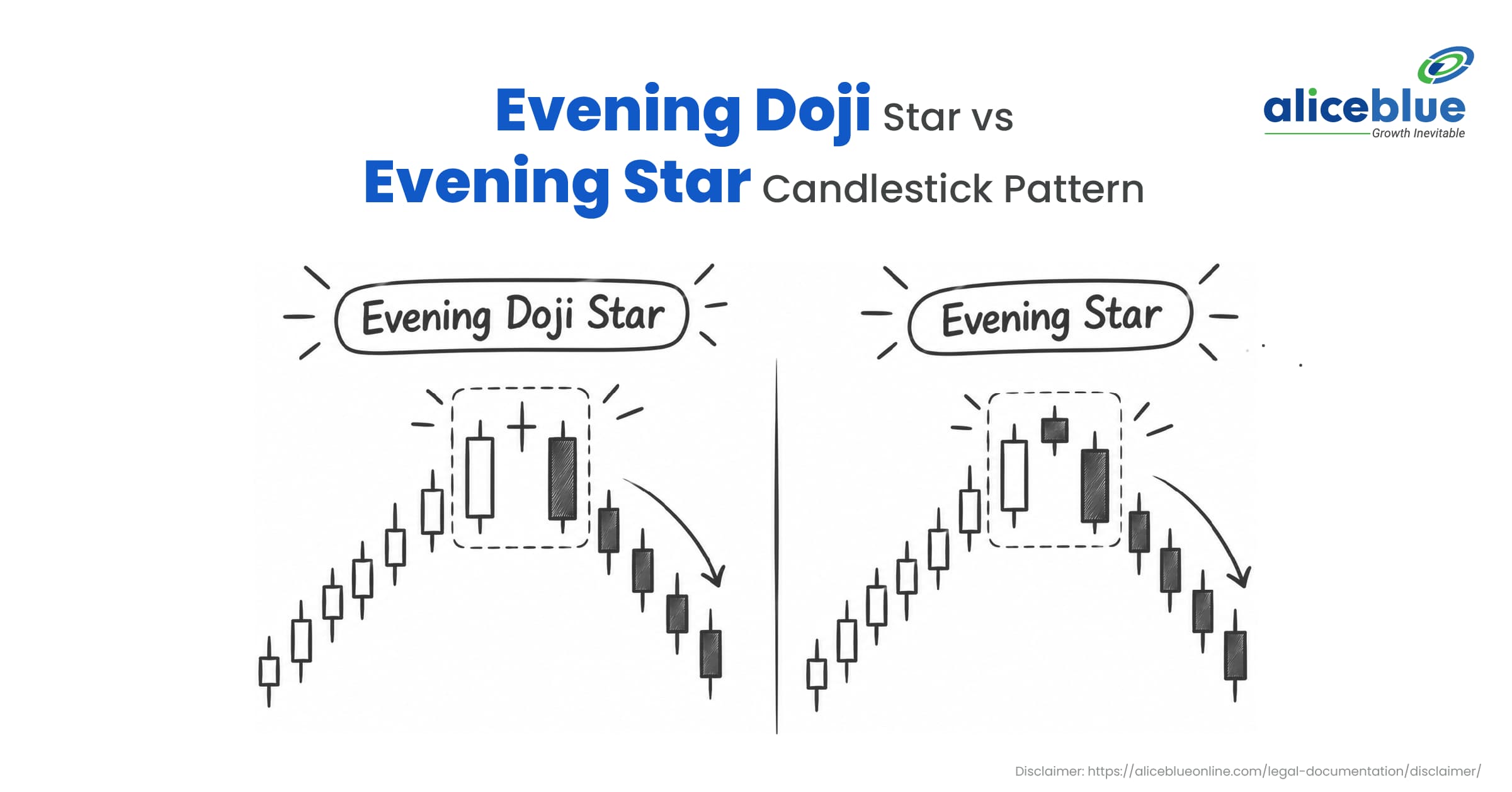
The Evening Doji Star and Evening Star are three-candle bearish reversal patterns that form after an uptrend. Both suggest that buying pressure may be weakening, but they differ in the middle candle.
The Evening Doji Star contains a Doji, where the opening and closing prices are nearly equal. The Evening Star has a small-bodied candle. Neither pattern guarantees a price decline, so traders generally look for confirmation before acting on the signal.
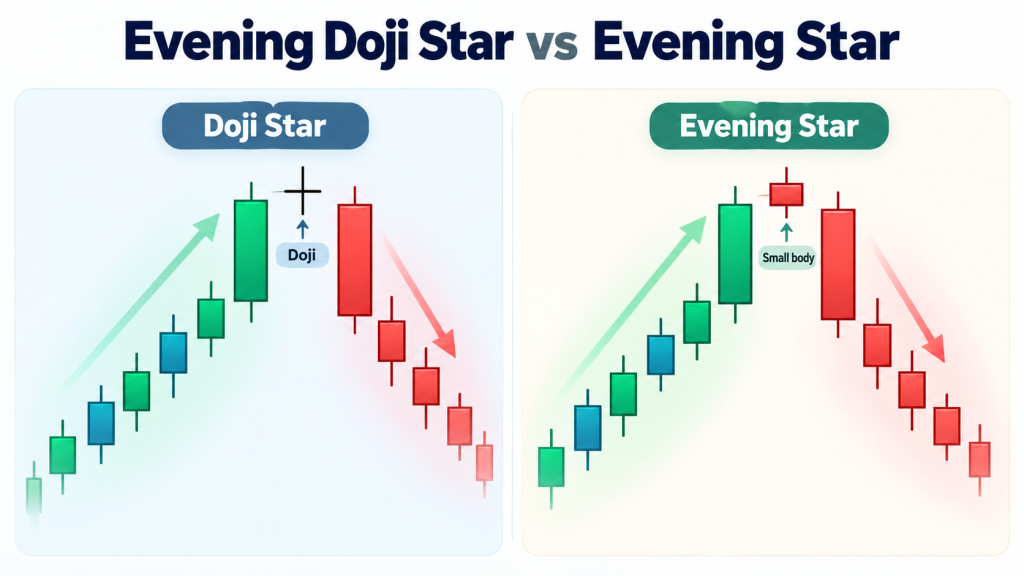
Table of Contents
- Evening Doji Star Meaning
- Evening Star Meaning
- Difference Between Evening Doji Star and Evening Star
- Characteristics of Both Patterns
- How to Identify Each Pattern
- Trading Strategies
- Quick Summary
- FAQs
Evening Doji Star Meaning
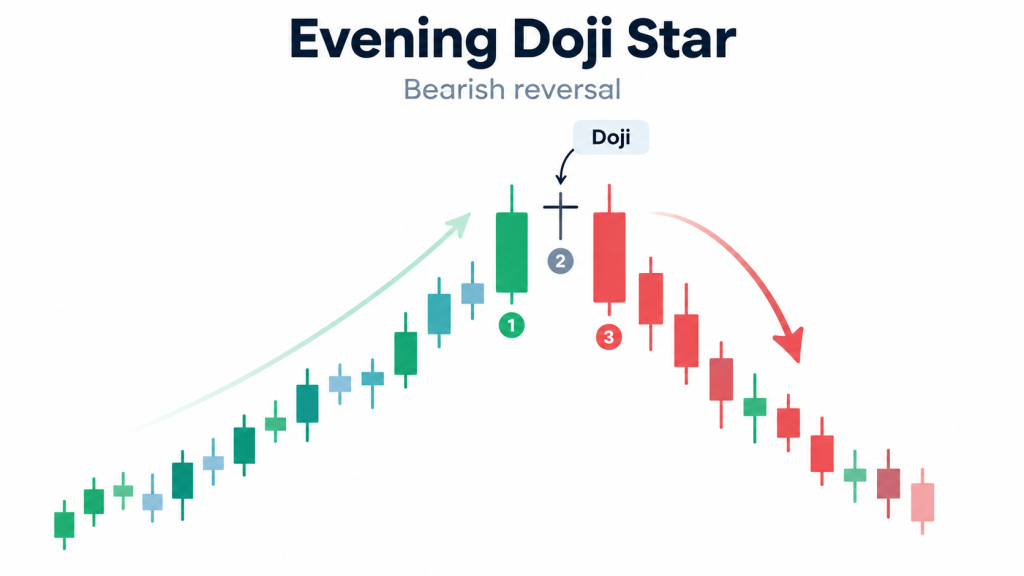
The Evening Doji Star is a three-candle bearish reversal pattern that appears near the top of an uptrend. It consists of a strong bullish candle, a Doji, and a bearish candle.
The first candle shows buying pressure. The Doji indicates indecision, as buyers and sellers struggle to move the price in one direction. The final bearish candle suggests that sellers may be gaining control.
A close below the midpoint of the first bullish candle is commonly used to confirm the pattern. Traders may also check trading volume and nearby resistance levels before interpreting it as a possible reversal.

Evening Star Meaning
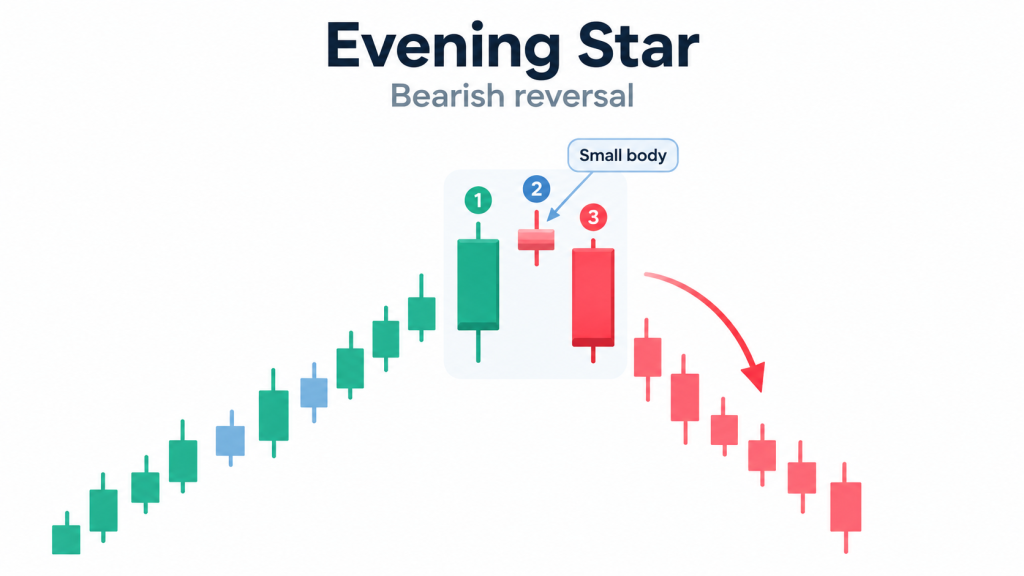
The Evening Star is a three-candle bearish reversal pattern that forms after an uptrend. It consists of a strong bullish candle, a small-bodied middle candle, and a strong bearish candle.
The first candle reflects buying momentum, while the smaller second candle suggests that the upward move may be losing strength. The third candle shows increased selling pressure.
The pattern is generally considered confirmed when the third candle closes below the midpoint of the first bullish candle. Traders may use this formation to assess a possible trend reversal, rather than treating it as a definite prediction of falling prices.
Difference Between Evening Doji Star and Evening Star Candlestick Pattern
The main difference is the middle candle. The Evening Doji Star has a Doji, while the Evening Star has a small real body. Both patterns suggest a possible bearish reversal, and neither is automatically more reliable than the other.
| Aspect | Evening Doji Star | Evening Star |
| Middle candle | Doji, with opening and closing prices nearly equal | Small-bodied candle |
| Market signal | Indecision after an upward move | Hesitation as buying momentum weakens |
| Formation | Bullish candle, Doji, bearish candle | Bullish candle, small-bodied candle, bearish candle |
| Confirmation | Third candle closes below the first candle’s midpoint | Third candle closes below the first candle’s midpoint |
| Interpretation | Possible shift from buying pressure to selling pressure | Possible shift from buying pressure to selling pressure |
The strength of either pattern depends on factors such as the preceding trend, the position of the formation on the chart, the final candle, and confirmation from other indicators. The Doji alone does not make the Evening Doji Star a stronger signal.
Characteristics of Evening Doji Star
The Evening Doji Star has three main features:
- Three-candle formation: A strong bullish candle is followed by a Doji and then a bearish candle.
- Market indecision: The Doji reflects a pause in price movement, with little difference between the opening and closing prices.
- Bearish confirmation: The third candle suggests that sellers may be gaining control, particularly when it closes below the midpoint of the first candle.
- Additional confirmation: Trading volume, resistance levels, and indicators such as RSI may provide further context.
A gap around the Doji can appear in this pattern, but it is not always present, particularly in markets where price gaps are less common.
Characteristics of Evening Star
The Evening Star also consists of three candles and usually appears after an upward price move.
- Three-candle formation: A bullish candle, a small-bodied candle, and a bearish candle form the pattern.
- Weakening buying pressure: The small middle candle suggests that the earlier upward momentum may be slowing.
- Bearish confirmation: The third candle indicates selling pressure and commonly closes below the midpoint of the first candle.
- Context matters: The pattern may be more meaningful near a resistance level or when supported by other signs of weakening momentum.
The middle candle can be bullish or bearish. Its defining feature is its relatively small real body.
How to Identify an Evening Doji Star Pattern
Follow these steps to identify an Evening Doji Star on a candlestick chart:
- Check the trend: Look for an established uptrend before the pattern forms.
- Find the first candle: Identify a strong bullish candle showing upward price movement.
- Look for the Doji: The second candle should have an opening price close to its closing price, creating a very small body.
- Check the third candle: Look for a bearish candle that closes below the midpoint of the first bullish candle.
- Seek confirmation: Review volume, resistance levels, and other technical indicators before interpreting the pattern as a possible reversal.
The three candles together provide the pattern. A Doji appearing by itself does not confirm an Evening Doji Star.
How to Identify an Evening Star Candlestick Pattern?
Use the following steps to identify an Evening Star:
- Identify an uptrend: The pattern should form after a period of rising prices.
- Look for a strong bullish candle: This is the first candle in the formation.
- Find the small-bodied candle: The second candle indicates hesitation after the upward move.
- Check for a bearish candle: The third candle should show selling pressure and close below the midpoint of the first candle.
- Confirm the signal: Check the broader price trend, volume, and nearby support or resistance levels.
The pattern indicates a possible change in direction, but the price may continue rising or move sideways instead.
Trading Strategies for Evening Doji Star
The main trading strategy for the Evening Doji Star pattern involves confirming the reversal with volume analysis, entering after the bearish confirmation candle, setting a stop-loss above the Doji’s high and defining profit targets using key support levels, moving averages, or trailing stops for risk management.
- Confirmation Before Entry: Wait for the bearish candle after the Doji to close below the first bullish candle’s midpoint, confirming the downtrend before entering the trade.
- Stop-Loss Placement: Place a stop-loss slightly above the Doji’s high to limit potential losses in case the price action reverses unexpectedly.
- Profit Targets: Identify key support levels or previous lows to set exit targets, ensuring a structured risk-reward ratio for optimized trading results.
- Volume Analysis: Validate the pattern with increasing bearish volume on the confirmation candle, reinforcing the pattern’s reliability and strengthening the bearish reversal signal
Trading Strategies for Evening Star
Traders who use the Evening Doji Star generally wait for the third candle to confirm the formation before considering a trade. Risk management remains important because the pattern can fail.
1. Wait for confirmation:
Check whether the third candle closes below the midpoint of the first bullish candle. Some traders also wait for further bearish price action before considering an entry.
2. Define the stop-loss level:
A trader considering a short position may use a level above the Doji’s high as a possible stop-loss reference. The exact level should account for the instrument, price movement, and trading plan.
3. Identify possible exit levels:
Previous support levels and chart-based price zones can help traders plan exits. A target should be assessed against the distance to the stop-loss before a trade is considered.
4. Review volume and other indicators:
Higher volume on the bearish confirmation candle may support the interpretation of increased selling pressure. RSI and moving averages can provide additional context, but they do not guarantee that the price will fall.
Trading Strategies for Evening Star
The same general principles apply to the Evening Star. Traders can use the formation to assess a possible bearish reversal while planning entry, exit, and risk limits.
1. Check the bearish candle:
Look for the third candle to close below the midpoint of the first bullish candle. This is a commonly used confirmation condition.
2. Plan a stop-loss:
The high of the pattern can serve as a reference for a stop-loss when considering a short trade. The final placement depends on the trader’s approach and the instrument being traded.
3. Set potential exit levels:
Previous support zones and other chart levels can help identify possible exit points. These are reference levels, not guaranteed price targets.
4. Use additional market information:
Trading volume, RSI, MACD, and moving averages may help assess whether bearish momentum is developing. Avoid relying on any single indicator or candlestick formation.
For chart analysis, traders can use ANT Web by Alice Blue, which offers charting tools and market information.
Difference Between Evening Doji Star and Evening Star – Quick Summary
- Evening Doji Star: A bullish candle, a Doji, and a bearish candle form a potential bearish reversal pattern after an uptrend.
- Evening Star: A bullish candle, a small-bodied candle, and a bearish candle form a similar potential reversal pattern.
- Main difference: The middle candle is a Doji in the Evening Doji Star and a small-bodied candle in the Evening Star.
- Confirmation: Both patterns are commonly confirmed when the third candle closes below the midpoint of the first bullish candle.
- Trading consideration: Volume, trend context, and support or resistance levels can help assess the formation. Neither pattern guarantees a reversal.
For more beginner-friendly trading and investing topics, explore the Alice Blue blog.

Evening Doji Star vs Evening Star Candlestick Pattern – FAQs
1. What Is the Difference Between Evening Doji Star and Evening Star?
The main difference is the second candle. The Evening Doji Star has a Doji, whose opening and closing prices are nearly equal. The Evening Star has a small-bodied candle. Both may signal a bearish reversal after an uptrend.
2. What Is an Evening Doji Star Pattern?
The Evening Doji Star is a three-candle bearish reversal pattern that appears after an uptrend. It consists of a bullish candle, a doji, and a bearish confirmation candle.
3. What Does the Evening Star Pattern Mean?
The Evening Star is a three-candle pattern that may indicate a shift from an uptrend to a downtrend. It consists of a bullish candle, a small-bodied candle, and a bearish candle.
4. Is the Evening Doji Star Pattern Reliable?
Its reliability varies with market conditions and the surrounding price action. The pattern may provide a more useful signal when supported by bearish confirmation, volume, and other technical evidence. It does not guarantee a price decline.
5. What Happens After an Evening Doji Star Pattern?
The price may decline if selling pressure increases, but it can also move sideways or continue rising. Traders often look for confirmation from subsequent price action before drawing conclusions.

Blog by Aliceblue News Desk
The Alice Blue Team is a passionate group of analysts delivering expert market insights, comprehensive coverage of stocks, economy, commodities, and personal finance through clear, actionable research.


