
Shooting Star vs Gravestone Doji Candlestick Pattern
Blog by Aliceblue News Desk
24 March 2025
14 minutes
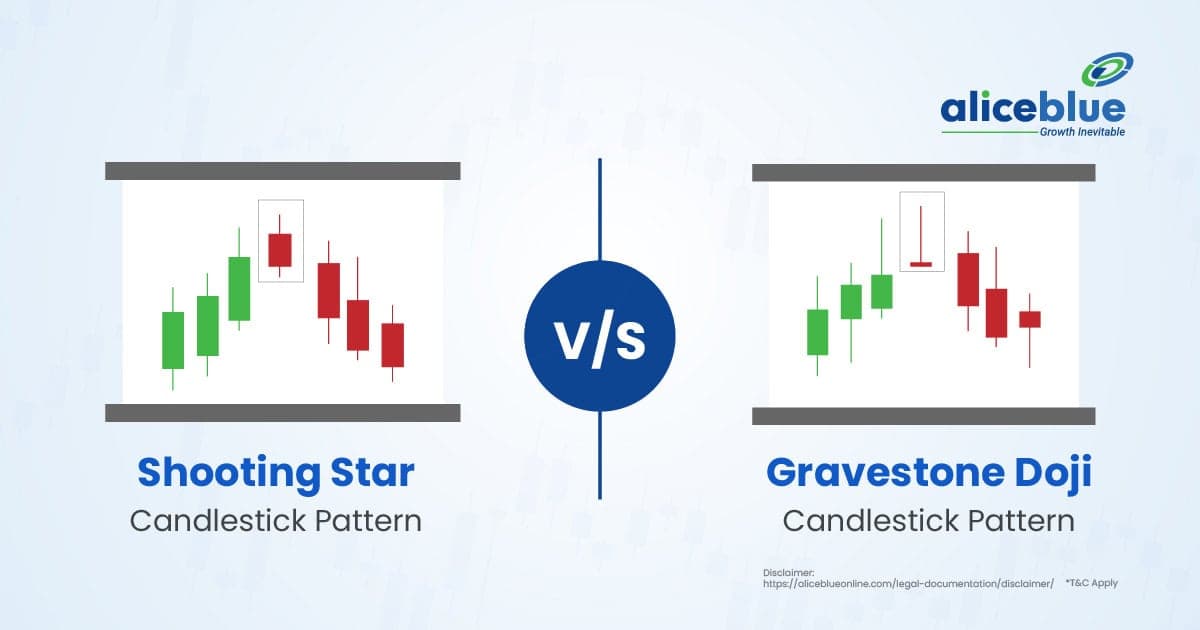
The main difference between the Shooting Star and Gravestone Doji candlestick patterns lies in their structure and confirmation strength. A Shooting Star has a small body with a long upper wick, while a Gravestone Doji has no real body, signalling indecision but a potential bearish reversal.
Shooting Star Meaning
A Shooting Star is a bearish reversal candlestick pattern that forms after an uptrend. It has a small real body near the low, a long upper shadow and little or no lower wick, indicating that buyers failed to sustain higher prices, leading to a potential reversal.
The Shooting Star forms when buyers push the price higher but fail to maintain gains, leading to selling pressure that drives the price back near the opening. This pattern signals weakening bullish momentum and a possible trend reversal.
Traders look for confirmation with a bearish candle following the Shooting Star. If the next candle closes lower, it strengthens the reversal signal. The pattern is most reliable when accompanied by high trading volume and key resistance levels.

Gravestone Doji Meaning
A Gravestone Doji is a bearish reversal candlestick pattern that occurs at the top of an uptrend. It has a long upper wick, no lower shadow and an open, close and low price near the same level, indicating strong selling pressure after initial buying attempts.
The Gravestone Doji forms when bulls push prices higher, but bears regain control, forcing the price back down to near the opening level. This pattern signifies the rejection of higher prices and the likelihood of a downward move if confirmed.
A bearish confirmation candle closing below the Gravestone Doji enhances its reliability. This pattern is most effective when appearing near key resistance levels or after extended uptrends, signalling potential reversals with increased market caution.
Difference Between Shooting Star and Gravestone Doji Candlestick Pattern
The main difference between the Shooting Star and Gravestone Doji candlestick patterns lies in their structure and confirmation. A Shooting Star has a small body with a long upper wick, while a Gravestone Doji has no real body, signalling indecision but a potential bearish reversal.
| Criteria | Shooting Star | Gravestone Doji |
| Formation | Appears after an uptrend | Appears after an uptrend |
| Body Position | Small real body near the low | No real body, open, close and low are nearly equal |
| Upper Wick | Long upper wick, at least twice the body size | Long upper wick, no lower shadow |
| Lower Wick | Little or no lower shadow | No lower shadow |
| Market Sentiment | Indicates buying failure and bearish reversal | Suggests rejection of higher prices and potential reversal |
| Confirmation | Requires a bearish candle closing below its low | Requires a bearish candle closing below its low |
| Reliability | Stronger near-resistance levels | Stronger at key resistance zones with high volume |
Characteristics of Shooting Star
The main characteristics of the Shooting Star pattern include a small real body near the low, a long upper wick at least twice its size, little or no lower shadow and formation after an uptrend, signaling a potential bearish reversal requiring confirmation from a strong follow-up candle.
- Small Real Body – The Shooting Star has a small real body near the low, indicating that buyers pushed prices higher but failed to sustain momentum, leading to selling pressure and potential bearish reversal signals in the market.
- Long Upper Wick – The upper wick is at least twice the size of the real body, showing that buyers attempted to push prices higher but faced strong resistance, leading to a decline before the closing price.
- Little or No Lower Shadow – A Shooting Star has minimal or no lower wick, reinforcing that selling pressure dominated the session, pushing the price back near its opening level, signaling potential weakness in the prevailing uptrend.
- Formation After an Uptrend – The Shooting Star must appear after an upward trend to be a valid reversal signal. It suggests that the bullish momentum is weakening and a trend reversal or price correction may follow.
- Requires Confirmation – A bearish confirmation candle closing below the Shooting Star’s low strengthens the pattern’s reliability. Traders use volume analysis and technical indicators like RSI or MACD to validate the bearish reversal before entering trades.
Characteristics of Gravestone Doji
The main characteristics of the Gravestone Doji include an open, high and close at nearly the same price, a long upper wick, no lower shadow, formation after an uptrend and a need for bearish confirmation to validate its potential reversal signal effectively.
- Open, High and Close Nearly Equal – The Gravestone Doji forms when the open, high and close prices are almost the same, indicating that buyers pushed prices higher but selling pressure forced them back to the opening level.
- Long Upper Wick – The upper wick is long, showing that buyers attempted to sustain higher prices, but strong selling pressure pushed the price back down, signalling potential weakness in the prevailing uptrend.
- No Lower Shadow – The absence of a lower shadow reinforces the bearish sentiment, indicating that prices failed to recover after the decline, suggesting that sellers gained complete control over the session’s price movement.
- Formation After an Uptrend – The Gravestone Doji appears at the top of an uptrend, signalling that the upward momentum is weakening and a potential bearish reversal or price correction may occur if confirmed by the next candle.
- Requires Bearish Confirmation – Traders wait for a bearish candle closing below the Gravestone Doji’s low to confirm the reversal. Volume analysis and indicators like RSI divergence help validate the bearish trend shift before entering short trades.
How to Identify a Shooting Star Pattern?
To identify a Shooting Star pattern, look for a small real body at the lower end of the candlestick with a long upper wick, at least twice the body’s size. It must form after an uptrend to signal a potential bearish reversal.
A Shooting Star’s long upper shadow indicates that buyers attempted to push prices higher, but strong selling pressure forced the price back down. The absence of a significantly lower wick reinforces the weakness in bullish momentum.
For confirmation, traders wait for the next candle to close below the Shooting Star’s low. Increased volume during its formation strengthens its reliability, especially when occurring near resistance levels or after a prolonged uptrend.

How to Identify a Gravestone Doji Candlestick Pattern?
To identify a Gravestone Doji, look for a candlestick where the open, low and close prices are nearly equal, with a long upper wick and no lower shadow. It must form after an uptrend to indicate a possible bearish reversal.
The long upper wick reflects a price rejection at higher levels, where buying pressure was overcome by aggressive selling. The price closing near the open signals uncertainty and potential bearish dominance if a downward follow-up candle appears.
Confirmation is crucial; a strong bearish candle closing below the Gravestone Doji confirms the trend reversal. This pattern is more reliable at resistance zones and when accompanied by high trading volume, suggesting a weakening uptrend.

Trading Strategies for Shooting Star
Traders enter short positions after a Shooting Star when the next candle closes below its low, confirming bearish momentum. A stop-loss is placed above the Shooting Star’s high, while profit targets are set at previous support levels or Fibonacci retracement zones.
Risk management is essential, as false signals can occur. Traders combine the Shooting Star with technical indicators like RSI overbought conditions or MACD bearish crossovers for higher accuracy in predicting potential price declines.
A Shooting Star at a key resistance level increases its reliability. If accompanied by high trading volume and a bearish confirmation candle, it strengthens the bearish reversal signal, making it an effective setup for short trades.
Trading Strategies for Gravestone Doji
Traders short a Gravestone Doji after confirmation, where the next candle closes below its low. A stop-loss is placed above the Doji’s high, with profit targets at previous support levels or moving average zones for effective risk management.
Additional confirmation from indicators like RSI divergence or a bearish MACD crossover strengthens trade accuracy. Combining the Gravestone Doji with volume analysis helps identify strong reversals, reducing the likelihood of false signals in volatile markets.
When a Gravestone Doji forms at a significant resistance level or trend exhaustion, its bearish signal becomes stronger. Traders monitor economic events and overall market sentiment to ensure alignment with broader bearish trends before entering trades.
Difference Between Shooting Star and Gravestone Doji – Quick Summary
- The main difference between the Shooting Star and Gravestone Doji candlestick patterns lies in their structure and confirmation. A Shooting Star has a small body with a long upper wick, while a Gravestone Doji has no real body, signalling indecision but a potential bearish reversal.
- A Shooting Star is a bearish reversal pattern that forms after an uptrend. It has a small real body near the low, a long upper wick and little or no lower shadow, indicating buyer weakness and a potential reversal if confirmed.
- A Gravestone Doji is a bearish reversal pattern occurring at the top of an uptrend. It features a long upper wick, no lower shadow and an open, close and low price near the same level, showing strong selling pressure after initial buying attempts.
- The main characteristics of the Shooting Star include a small real body near the low, a long upper wick at least twice its size, little or no lower shadow and formation after an uptrend, requiring confirmation for a potential bearish reversal.
- The main characteristics of the Gravestone Doji include an open, high and close at nearly the same price, a long upper wick, no lower shadow and formation after an uptrend, signalling potential reversal if followed by bearish confirmation.
- To identify a Shooting Star, look for a small real body at the lower end of the candlestick with a long upper wick, at least twice the body’s size. It must appear after an uptrend to indicate a potential bearish reversal.
- To identify a Gravestone Doji, look for a candlestick where the open, low and close prices are nearly equal, with a long upper wick and no lower shadow. It must form after an uptrend to suggest a possible bearish reversal.
- Traders enter short positions after a Shooting Star when the next candle closes below its low, confirming bearish momentum. A stop-loss is set above the Shooting Star’s high, with profit targets at prior support levels or Fibonacci retracement zones.
- Traders short a Gravestone Doji after confirmation when the next candle closes below its low. A stop-loss is placed above the Doji’s high, with profit targets set at previous support levels or moving averages for risk management.
- Open a free demat account with Alice Blue in 15 minutes today! Invest in Stocks, Mutual Funds, Bonds & IPOs for Free. Also, trade at just ₹ 20/order brokerage on every order.

Shooting Star vs Gravestone Doji Candlestick Pattern – FAQs
What Is The Difference Between Shooting Star and Gravestone Doji?
The main difference between the Shooting Star and Gravestone Doji patterns lies in their structure and confirmation. A Shooting Star has a small body with a long upper wick, while a Gravestone Doji has no real body, signalling indecision but a potential bearish reversal.
What Is A Shooting Star Pattern?
A Shooting Star pattern is a bearish reversal candlestick that appears after an uptrend. It has a small body near the low, a long upper shadow and little to no lower wick, indicating buyer failure and potential price reversal if confirmed by a bearish candle.
What Is Gravestone Doji Meaning?
A Gravestone Doji is a bearish reversal candlestick pattern forming at the peak of an uptrend. It has a long upper shadow with an open, close and low price near the same level, signaling strong selling pressure and potential trend reversal if confirmed.
Is The Shooting Star Pattern Reliable?
The Shooting Star pattern is considered reliable when confirmed by a strong bearish candle closing below its low. Reliability increases when it forms near resistance levels with high volume, along with indicators like RSI divergence or MACD crossovers supporting the reversal signal.
What Happens After A Shooting Star Pattern?
After a Shooting Star pattern, if a bearish confirmation candle appears, prices may decline, signalling a potential trend reversal. Traders use stop-loss above the high and target previous support levels, relying on additional indicators to confirm market weakness and bearish sentiment.
What Happens After A Gravestone Doji Candlestick Pattern?
After a Gravestone Doji, if a bearish confirmation candle follows, a price reversal is likely. The failed bullish momentum signals potential downside movement, prompting traders to enter short positions, placing stop-loss above the Doji’s high and targeting previous support zones.
Is Gravestone Doji A Stronger Signal Than Shooting Star?
The Gravestone Doji is often considered a stronger bearish signal than the Shooting Star because it indicates complete price rejection at higher levels. However, its reliability depends on confirmation, volume analysis and its formation at key resistance or overbought conditions.
What Does A Shooting Star Pattern Indicate?
A Shooting Star pattern indicates a potential bearish reversal after an uptrend. It shows that buyers tried to push prices higher but failed, as sellers regained control, leading to a possible downtrend if confirmed by subsequent price action and trading volume.
What Is The Opposite Of The Gravestone Doji Pattern?
The opposite of the Gravestone Doji is the Dragonfly Doji, a bullish reversal pattern forming after a downtrend. It has a long lower shadow with an open, high and close near the same price, indicating rejection of lower prices and potential trend reversal.
Can Shooting Star and Gravestone Doji Occur In Both Uptrends And Downtrends?
Shooting Star and Gravestone Doji patterns typically occur in uptrends, signalling bearish reversals. However, in rare cases, they may appear in downtrends, but their reliability weakens. Traders prefer using them at trend peaks to confirm potential downward price movements with strong confirmation signals.
We hope you’re clear on the topic, but there’s more to explore in stocks, commodities, mutual funds, and related areas. Here are important topics to learn about.
Disclaimer: The above article is written for educational purposes and the companies’ data mentioned in the article may change with respect to time. The securities quoted are exemplary and are not recommendatory.

Blog by Aliceblue News Desk
The Alice Blue Team is a passionate group of analysts delivering expert market insights, comprehensive coverage of stocks, economy, commodities, and personal finance through clear, actionable research.


