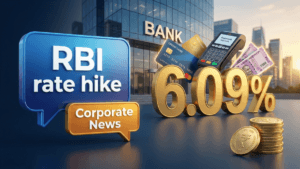
RBI rate hike December 2026 expected as CPI inflation breaches band
News by Aliceblue News Desk
17 Nov 2026
RBI rate hike December 2026 expected as CPI inflation breaches band
Deck: India’s retail inflation reached 6.09 percent in October, surpassing the RBI’s upper tolerance limit. Analysts now anticipate a 25 bps repo rate increase in December 2026 to address rising price pressures across the economy.
Quick Summary
- Event: Market expectations for an RBI rate hike December 2026 have intensified following a breach of the inflation target.
- Key reason: October retail inflation hit 6.09 percent, exceeding the central bank’s 2-6 percent tolerance band.
- Impact: Analysts project a 25 bps hike in December, potentially followed by another increase in February 2027.
- Market reaction: Rising interest rate concerns may weigh on stock valuations, challenging the recent 10 percent equity market rebound.
At a Glance
- The Move: Financial experts and brokerages are factoring in a 25 basis points repo rate hike for the upcoming December 2026 policy meeting.
- Main Trigger: Consumer Price Index (CPI) inflation rose to 6.09 percent in October, while Wholesale Price Index (WPI) inflation accelerated to 12.29 percent.
- Next Watchpoint: The RBI’s December policy decision and subsequent inflation data for November, which is expected to remain around 6 percent.
What Happened?
RBI rate hike December 2026 expectations have surged as India’s retail inflation breached the central bank’s 6 percent upper tolerance band in October. Consumer Price Index (CPI)-based inflation rose to 6.09 percent, marking the first time in two years that price growth has exceeded the mandated 2-6 percent range.
As reported on November 17, 2026, the Wholesale Price Index (WPI) also showed a sharp acceleration, climbing to 12.29 percent in October from 11.39 percent in September. In response to these figures, analysts from Barclays and CareEdge Ratings have projected a 25 bps increase in the repo rate during the December meeting, with the possibility of an additional hike in February 2027 to bring the policy rate to 6 percent.
Why Did It Happen?
The breach of the RBI’s inflation threshold was primarily driven by higher fuel and power prices, alongside an increase in the cost of food and other commodities. According to market experts, inflation that was initially imported—largely due to crude oil—has now spread into the wider domestic economy, making it a more significant concern for policymakers.

Furthermore, domestic food inflation remains vulnerable to weather-related disruptions. Reports indicate that low reservoir levels, poor soil moisture, and drought conditions across several states are threatening crop output. These supply-side pressures, combined with high wholesale inflation feeding into retail prices, have strengthened the case for a measured increase in interest rates to maintain economic stability.
What Does It Mean for Markets?
The potential for higher interest rates poses a fresh challenge to the 10 percent rebound seen in Indian equities since their October lows. Market experts suggest that rising discount rates typically lead to lower stock valuations. Unless corporate earnings growth is strong enough to offset the impact of higher borrowing costs, equity prices could face sustained pressure.
The overall sentiment is currently cautious as investors adjust to the possibility of the repo rate reaching 6 percent by February 2027. While the moderation of crude oil prices following the US midterm elections provides some relief, the persistence of elevated price pressures suggests that valuations may remain under scrutiny. Barclays has maintained its CPI inflation forecast at 5.2 percent for FY27, though it expects near-term pressures to remain elevated.

What to Watch Next
- RBI December Policy: Market participants will closely monitor the Monetary Policy Committee’s decision, with a 25 bps hike currently anticipated by major brokerages.
- November Inflation Data: Barclays expects November CPI inflation to remain around 6 percent, which will be a critical indicator for the February 2027 policy outlook.
- Agricultural Conditions: The impact of drought and soil moisture levels on food prices will be a key factor, as CareEdge projects WPI inflation to average around 10 percent in FY27.
FAQs
1. What was India’s retail inflation rate in October 2026?
According to the latest data, Consumer Price Index (CPI)-based inflation rose to 6.09 percent in October. This figure represents a breach of the RBI’s upper tolerance limit of 6 percent for the first time in two years.
2. Why did WPI inflation accelerate to 12.29% in October?
Wholesale Price Index (WPI) inflation climbed to 12.29 percent in October, up from 11.39 percent in September. This acceleration was largely driven by higher prices for fuel and power, as well as increases in food and other commodity costs.
3. How much of a rate hike does Barclays predict for the December meeting?
Analysts at Barclays expect the RBI’s Monetary Policy Committee to raise the repo rate by 25 bps at its December meeting. They also anticipate a further 25 basis points increase in February 2027.
4. What is the RBI’s official inflation tolerance band?
The Reserve Bank of India operates within an official retail inflation tolerance band of 2-6 percent. The October reading of 6.09 percent moved the index above this comfort zone.
5. Which weather-related factors are threatening food inflation?
Domestic food inflation is currently vulnerable to low reservoir levels, poor soil moisture, and drought conditions across several states, which could affect crop output.
6. What is the projected average WPI inflation for FY27 according to CareEdge?
CareEdge Ratings projects that Wholesale Price Index (WPI) inflation will average around 10 percent for the full fiscal year FY27, citing concerns about high wholesale prices feeding into retail inflation.
Source Note and Disclaimer
This article is based strictly on the source report regarding inflation data and interest rate expectations as of the reporting date, November 17, 2026. This content is for informational and educational purposes only and does not constitute SEBI-registered investment advice or a recommendation to buy or sell any security.

News Author
Aliceblue News Desk